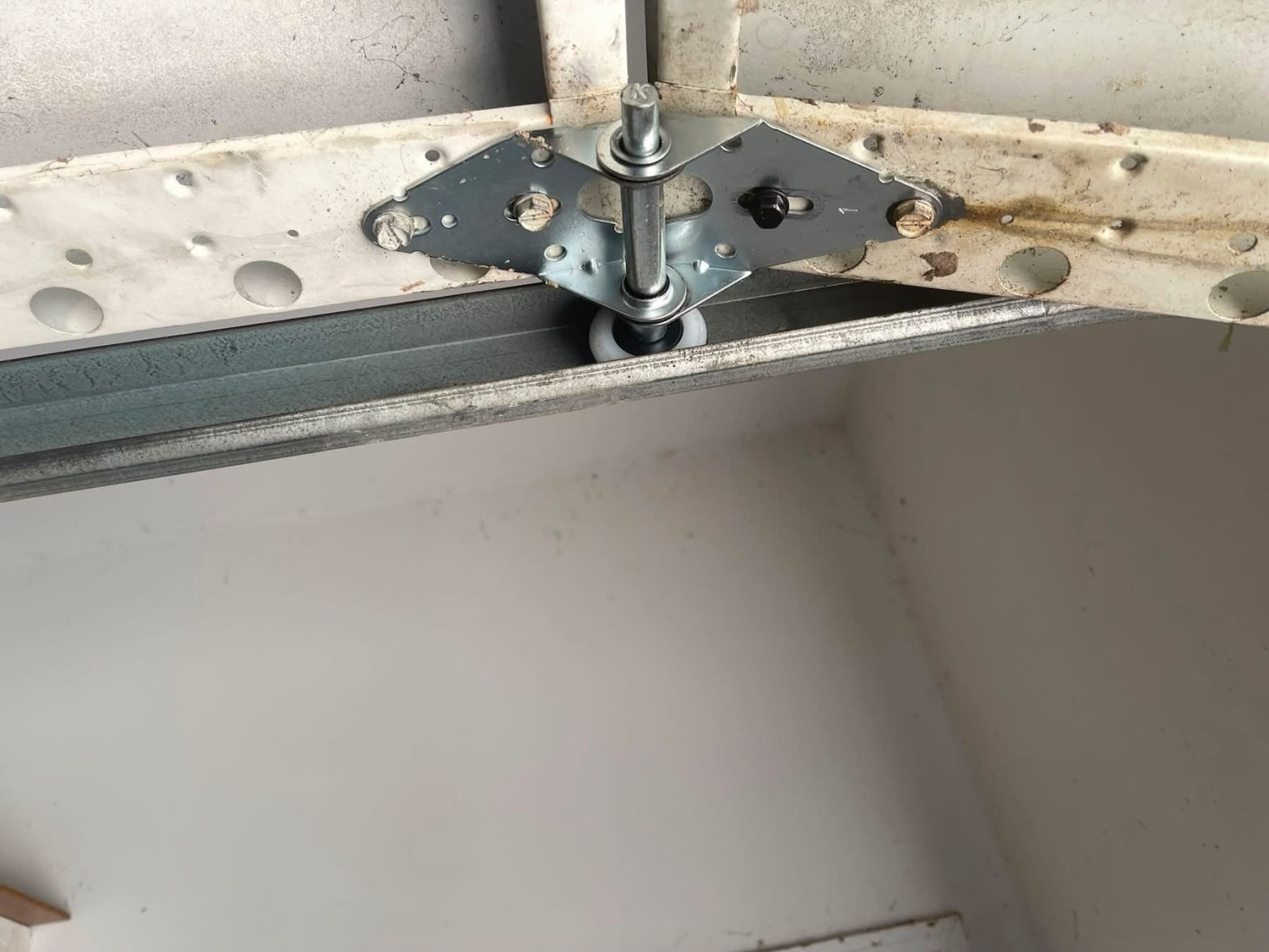
This customer’s garage door had broken torsion springs, which meant the door was no longer properly counterbalanced and wasn’t going to operate the way it should.
We removed the failed springs, installed the proper replacements, adjusted the system, and got the door back to a smooth, balanced lift.
A broken spring can make a garage door:
✅ Extremely heavy ✅ Difficult or impossible to open ✅ Hard on the opener ✅ Unsafe to operate if you keep forcing it
If you hear a loud bang from the garage, notice a visible gap in the spring, or your door suddenly becomes much harder to lift, stop using it and have it checked.
This older garage door had become stiff, noisy, and rough while traveling up and down the tracks.
The rollers were worn and no longer moving the way they should, which was creating extra resistance and making the entire door work harder than necessary.
We replaced the old rollers, and the difference was immediate.
✅ Smoother travel ✅ Quieter operation ✅ Less resistance ✅ Less strain on the opener and other hardware ✅ A door that moves the way it’s supposed to again
The video shows the proof.
Sometimes a noisy or rough-running garage door doesn’t need a major repair — a few worn components can make the whole system feel like it’s falling apart.
If your garage door is shaking, dragging, squeaking, or getting harder to move, worn rollers could be part of the problem.
Give The Garage Door Guys a call and we’ll get it checked out.
When a garage door suddenly refuses to open, it can be tempting to keep trying until something finally moves.
That’s usually when a small problem turns into a much bigger one.
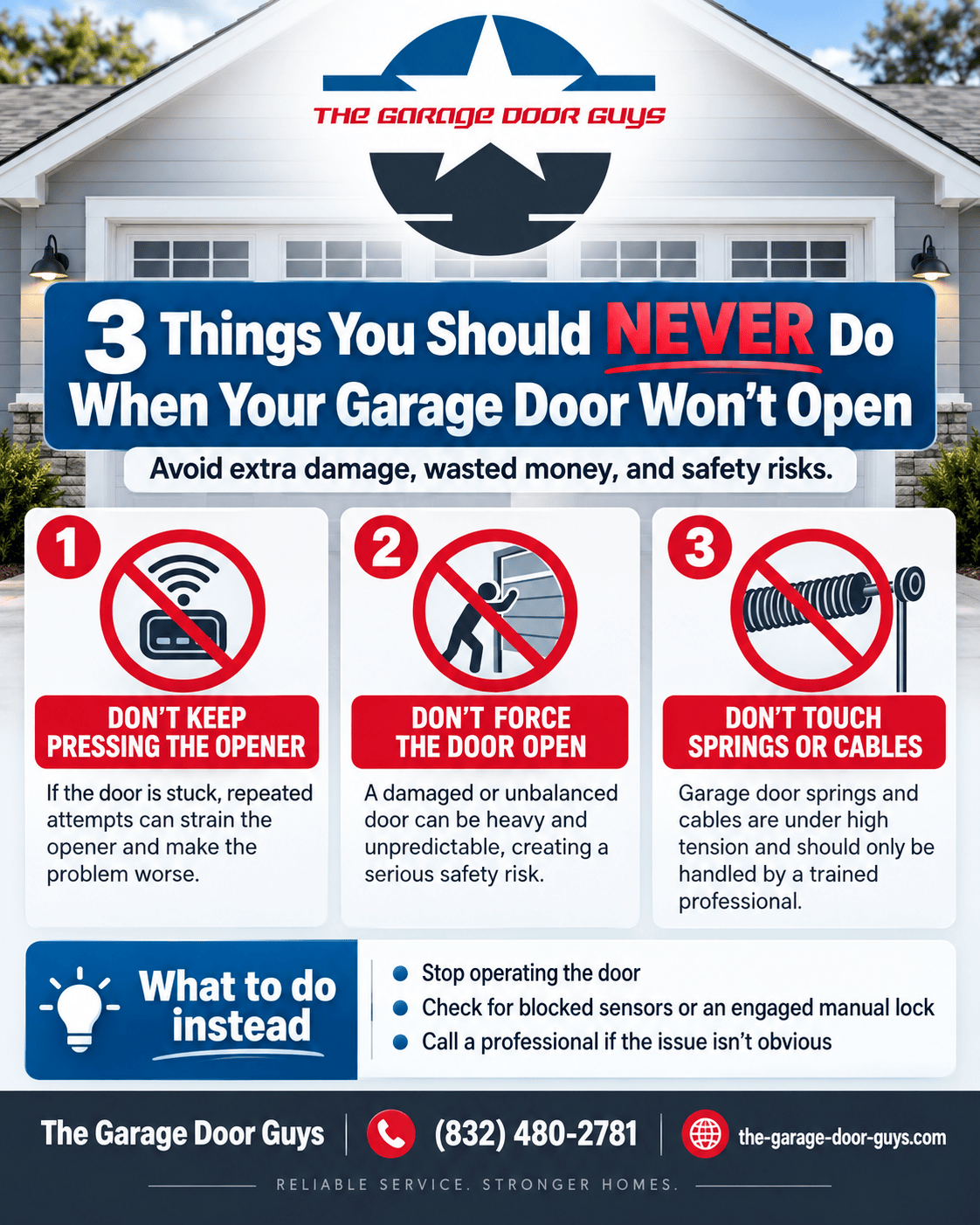
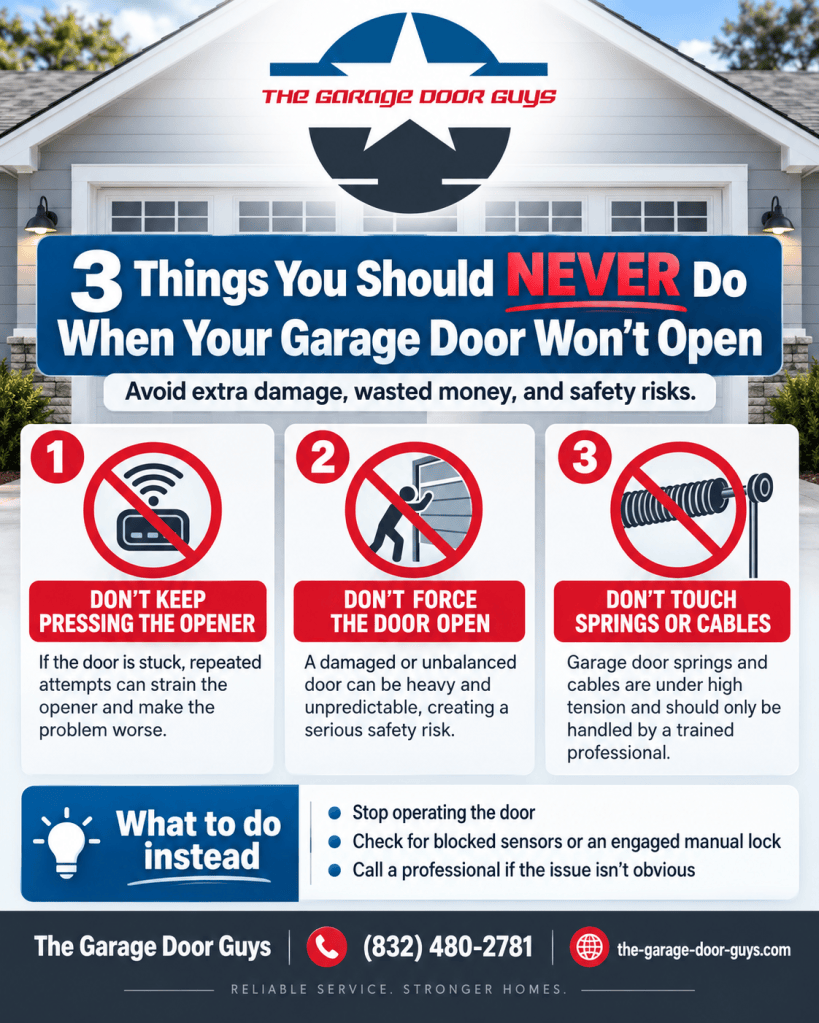
Here are 3 things you should never do:
1️⃣ Don’t keep forcing the opener
If the door is stuck, heavy, crooked, or binding, repeatedly pressing the button can put unnecessary strain on the opener and other components.
The opener is designed to assist a properly balanced door — not overpower a mechanical problem.
2️⃣ Don’t try to lift a damaged or unbalanced door by yourself
If a spring has broken or a cable has come loose, the door may be much heavier than normal and can move unpredictably.
That can create a serious safety risk.
3️⃣ Don’t start adjusting springs or cables
Garage door springs and cables are under significant tension. Trying to adjust or remove them without the proper tools and training can cause serious injury.
So what should you do instead?
✅ Stop operating the door ✅ Look for anything obviously blocking the tracks or sensors ✅ Check whether the manual lock has accidentally been engaged ✅ If the problem isn’t obvious, call a professional
Sometimes the issue is simple. Other times, continuing to operate the door can make the damage much worse.
If your garage door won’t open, is stuck halfway, or suddenly feels much heavier than normal, give The Garage Door Guys a call.
Today we want to recognize the hardworking men and women who keep our communities moving every single day.
Whether you’re spending the day relaxing, grilling, working around the house, or just enjoying some well-earned time off, we hope you have a safe and enjoyable Labor Day.
We’re proud to serve homeowners throughout Kingwood, Humble, Porter, Spring, and the surrounding areas, and we appreciate everyone who continues to support local businesses like ours.
From all of us at The Garage Door Guys — Happy Labor Day!
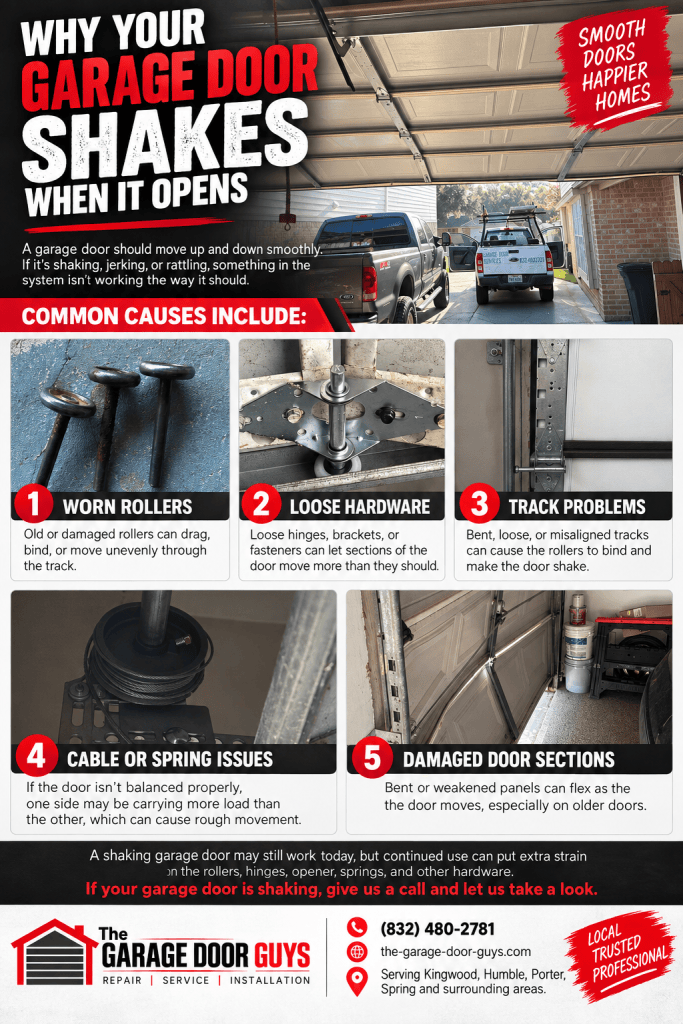
A garage door should move up and down smoothly. If it’s shaking, jerking, or rattling every time you use it, that usually means something in the system isn’t moving the way it should.
Some common causes include:
🔧 Worn rollers Old or damaged rollers can drag, bind, or move unevenly through the track.
⚙️ Loose hinges or hardware Loose hinges, brackets, or fasteners can let sections of the door move more than they should.
📏 Track problems Bent, loose, or misaligned tracks can cause the rollers to bind and make the whole door shake.
🪢 Cable or spring issues If the door isn’t balanced properly, one side may be carrying more load than the other, which can cause rough movement.
🚪 Damaged door sections Bent or weakened panels can flex as the door moves, especially on older doors.
The important thing is not to ignore it.
A shaking garage door may still work today, but continued use can put extra strain on the rollers, hinges, opener, springs, and other hardware.
If your garage door sounds rough or looks like it’s struggling every time it opens, give The Garage Door Guys a call and let us take a look.
Knowing where to use the right lubricant matters just as much as using lubricant at all.
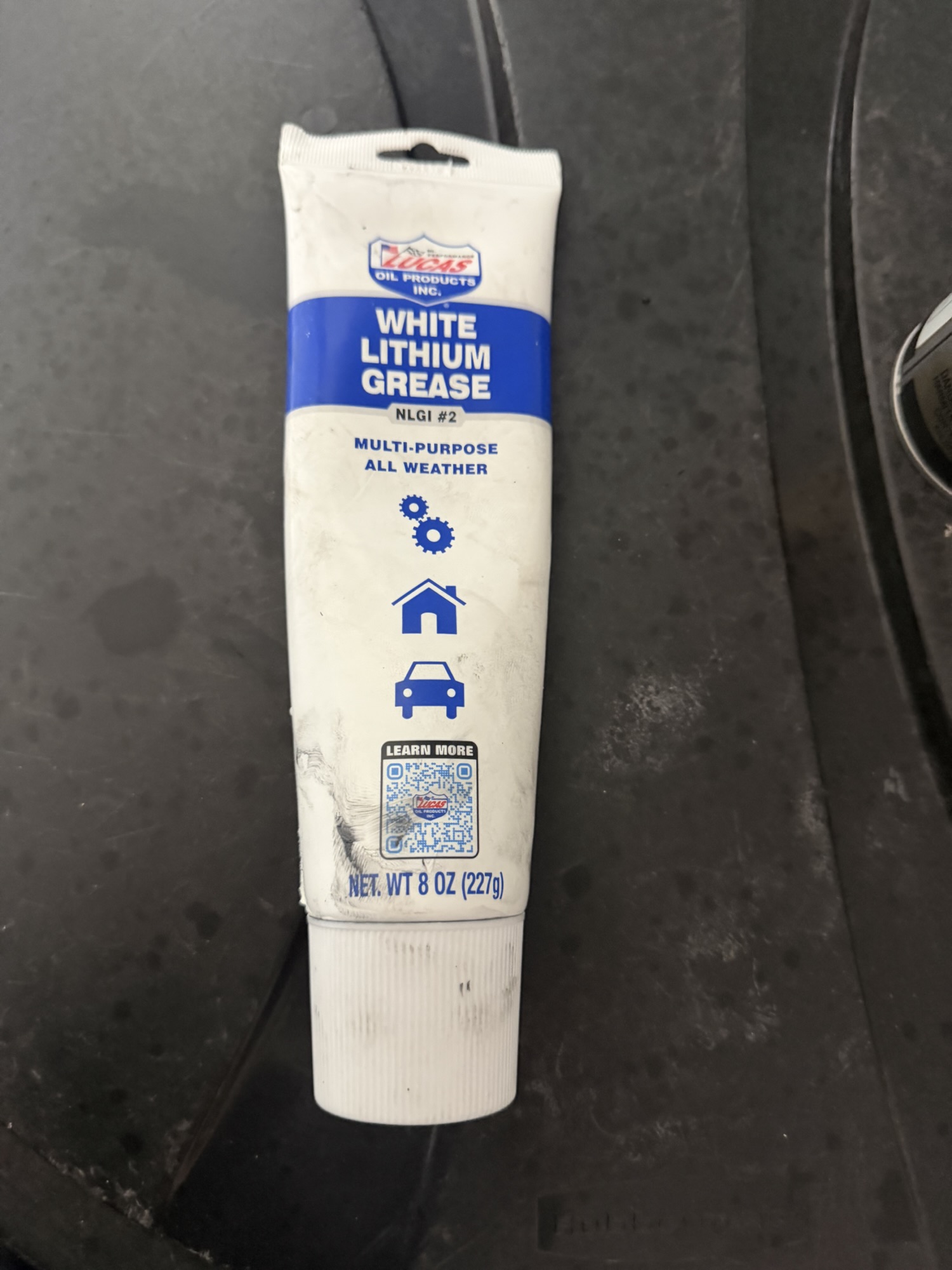
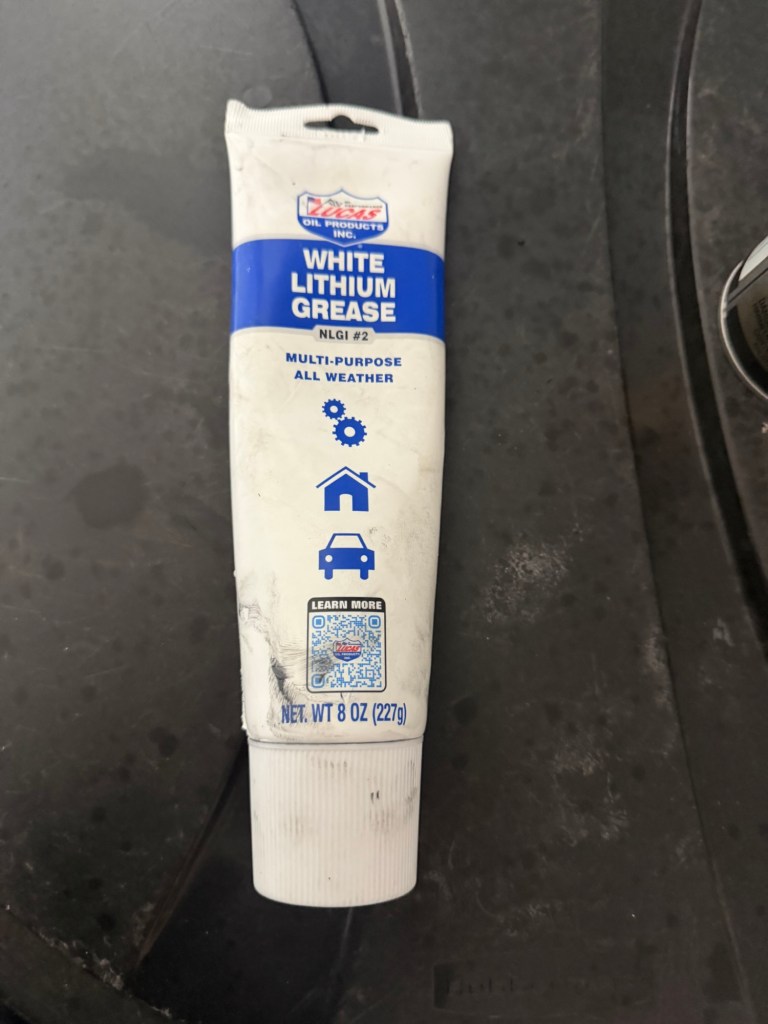
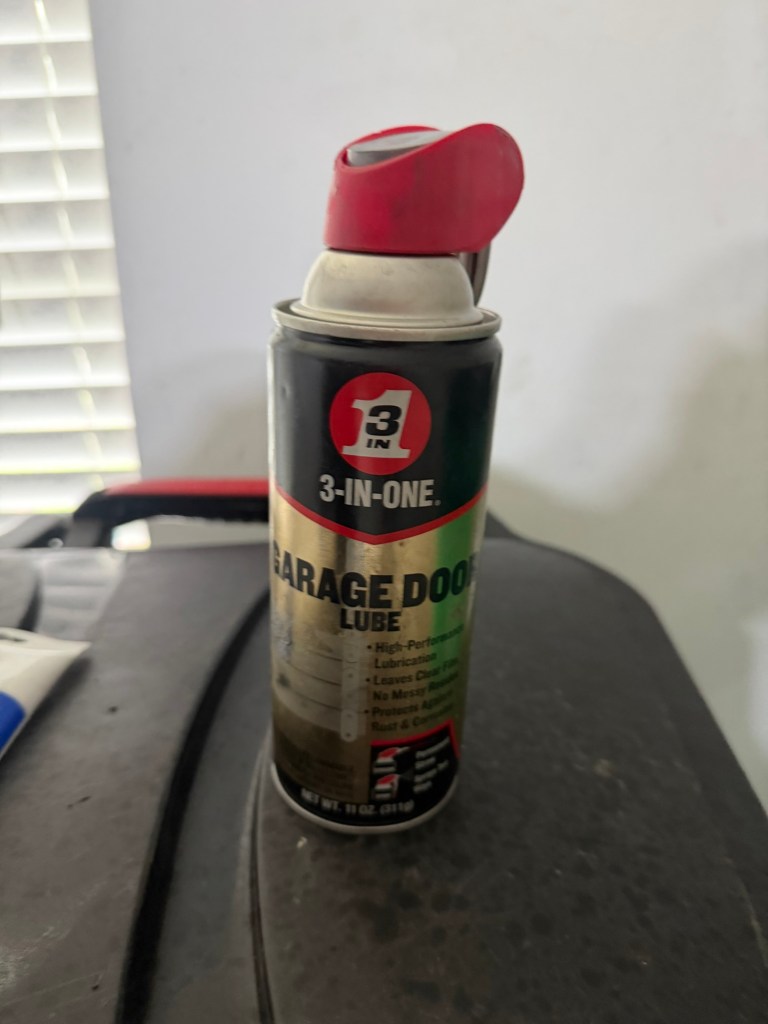
The two products in these photos serve very different purposes:
🔧 White Lithium Grease This is a heavier grease that is commonly appropriate for certain older screw-drive garage door openers where the manufacturer calls for grease on the screw-drive rail.
What you generally don’t want to do is coat the garage door’s rollers, hinges, tracks, or other moving door components with heavy grease.
Why? Because it can attract dirt and debris, create unnecessary drag, and make the door harder to move — which means the opener has to work harder.
🛠️ Garage Door Lubricant Spray This is designed specifically for the moving parts of the garage door itself, such as appropriate hinge pivot points, bearings, springs, and roller components where lubrication is recommended.
It’s lighter and better suited for reducing friction without loading the door down with thick grease.
But the opposite problem can happen too:
Garage door lubricant is often too light for opener components that specifically require grease, particularly older screw-drive systems. Using the wrong lubricant there may not provide the protection the opener needs.
The simple rule:
✅ Lubricate the garage door with garage door-specific lubricant. ✅ Use grease on an opener only where the opener manufacturer specifically calls for it. ❌ Don’t assume one product should be sprayed or smeared over everything.
And remember — garage door tracks themselves generally should not be greased. They need to stay clean so the rollers can travel properly.
Using the right product in the right place can help your door operate smoother, quieter, and with less unnecessary strain on the opener.
Have questions about maintaining your garage door? Give The Garage Door Guys a call.
We recently had a customer reach out because their garage door was making a tremendous amount of noise and moving around excessively as it traveled up and down.
With a couple of broken hinges, sections of the door were no longer being held together the way they should be. From the customer’s perspective, it sounded and felt like the entire door might be coming apart — and they were worried they were looking at a full replacement.
Fortunately, that wasn’t the case.
After inspecting the door, we found that all it really needed was a couple of new hinges. We replaced the damaged ones with heavy-duty hinges designed to be more durable than a standard garage door hinge, checked the operation, and the difference was immediate.
✅ Door sections were secured properly again ✅ Excess movement was eliminated ✅ The noise was dramatically reduced ✅ The door was back to running smoothly
This is a good reminder that a noisy or rough-running garage door doesn’t automatically mean you need a new one.
Sometimes the right repair is all it takes.
If your garage door is shaking, rattling, popping, or sounds like it’s trying to come apart every time you use it, give The Garage Door Guys a call before assuming the worst.
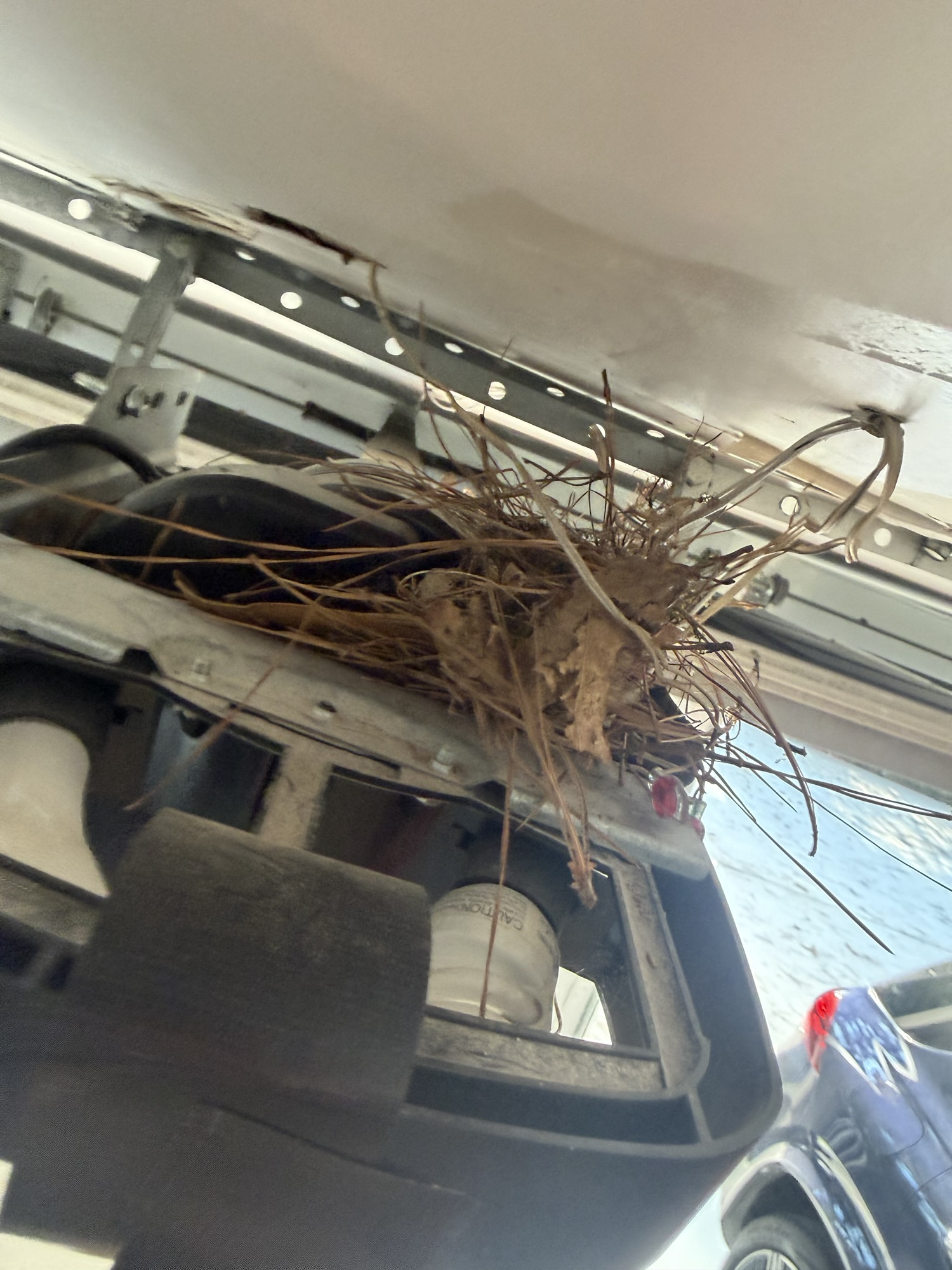
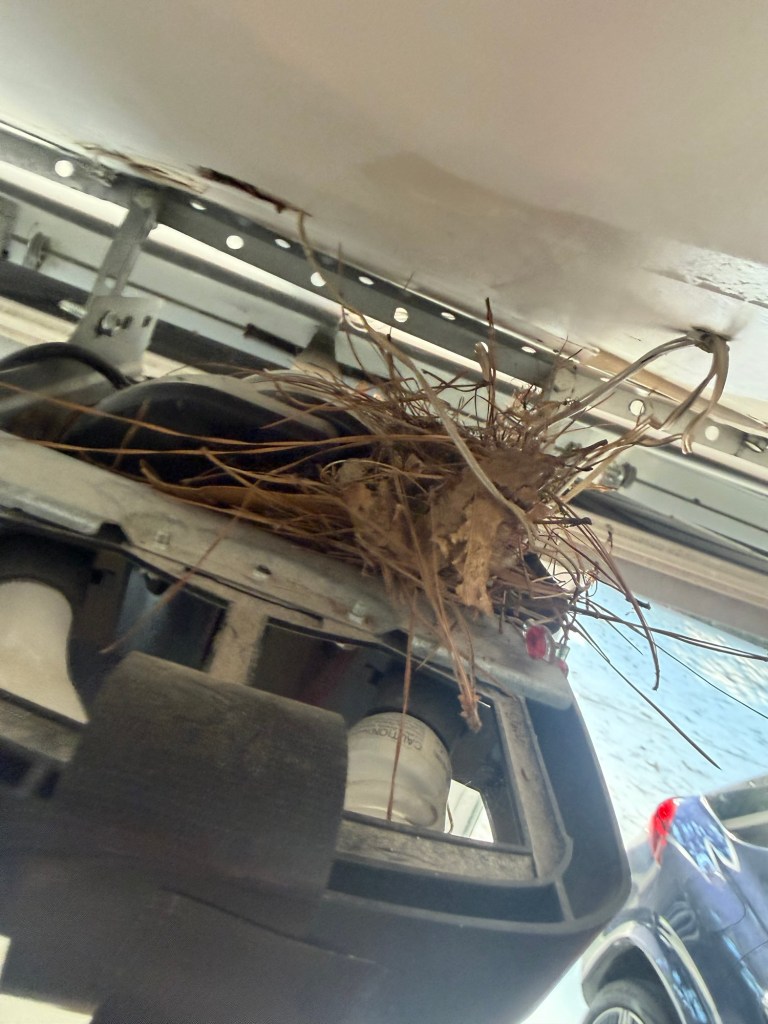
We went out on this job because the garage door opener had failed, but while inspecting everything we found something else worth pointing out — a bird had built a nest directly on top of the opener.
Garage door openers and other moving components can seem like a convenient, protected place for birds, mice, and other small animals to settle in. The problem is that these areas contain moving parts, electrical components, wiring, and mechanisms that operate every time the door is used.
That can create problems for both the animal and your garage door system.
A nest or debris around the opener can potentially:
⚠️ Interfere with moving parts ⚠️ Damage or pull on wiring ⚠️ Block ventilation around the motor ⚠️ Drop debris into the opener or rail ⚠️ Create a dangerous situation when the door operates
It’s worth occasionally looking above and around your garage door opener, tracks, and other hardware — especially if you’ve noticed birds or small animals getting into the garage.
If you do find an active nest, use caution. Depending on the type of animal and whether the nest is occupied, removal may be something that should be handled appropriately rather than simply pulling it down.
And if your opener is making unusual noises, behaving inconsistently, or has stopped working altogether, give The Garage Door Guys a call.
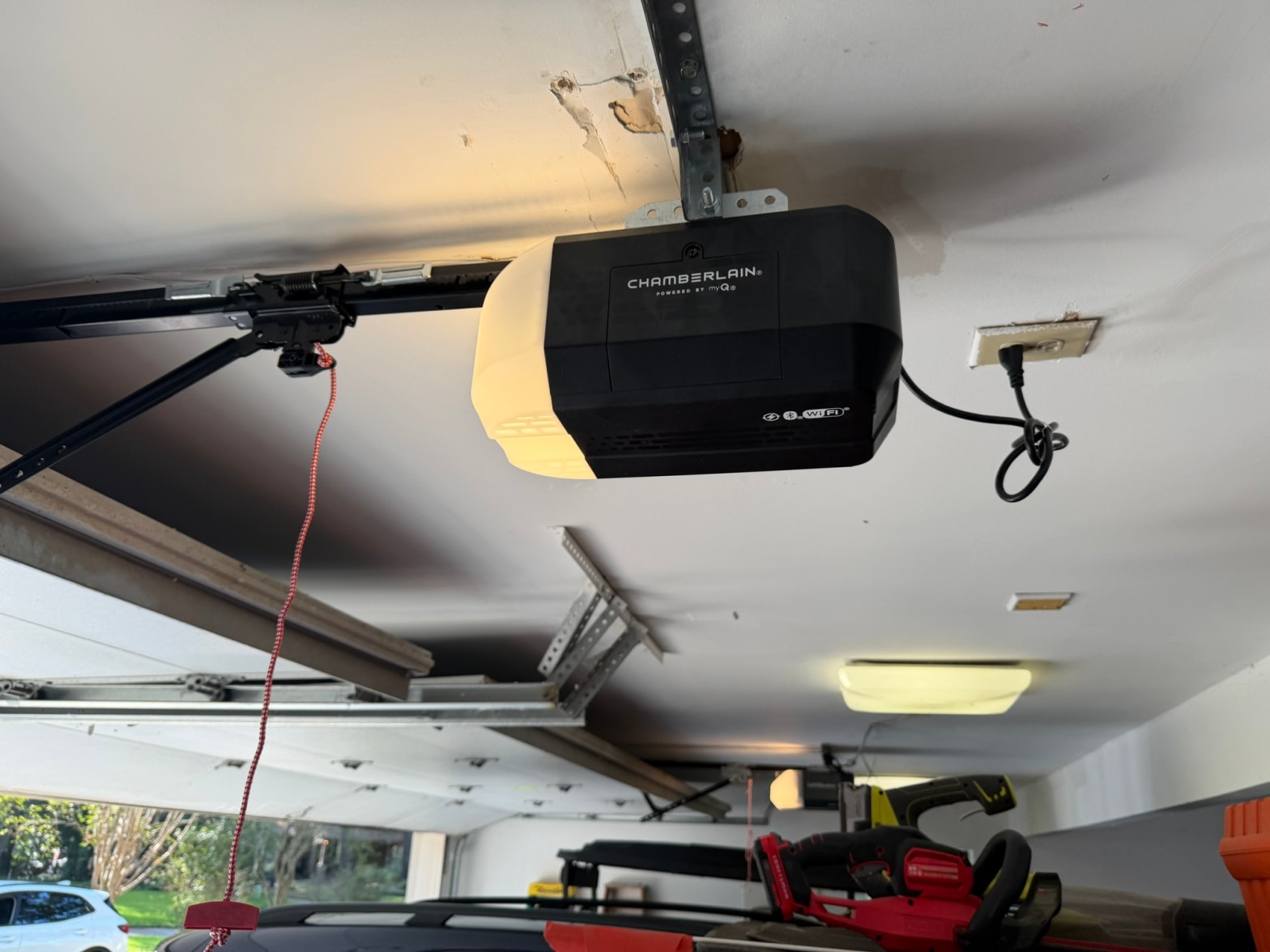
For this job, we removed the old setup and installed a new garage door opener to give the customer smoother, more reliable operation.
A new opener can make a noticeable difference, especially if your current unit is getting loud, inconsistent, slow, or simply reaching the end of its life.
With a properly installed opener, you get:
✅ Smoother operation ✅ Quieter performance ✅ More reliable opening and closing ✅ Updated safety features ✅ Better everyday convenience
If your current garage door opener is struggling, making unusual noises, or becoming unreliable, it may be time to replace it.
Give The Garage Door Guys a call and we’ll help you get the right opener installed for your door.
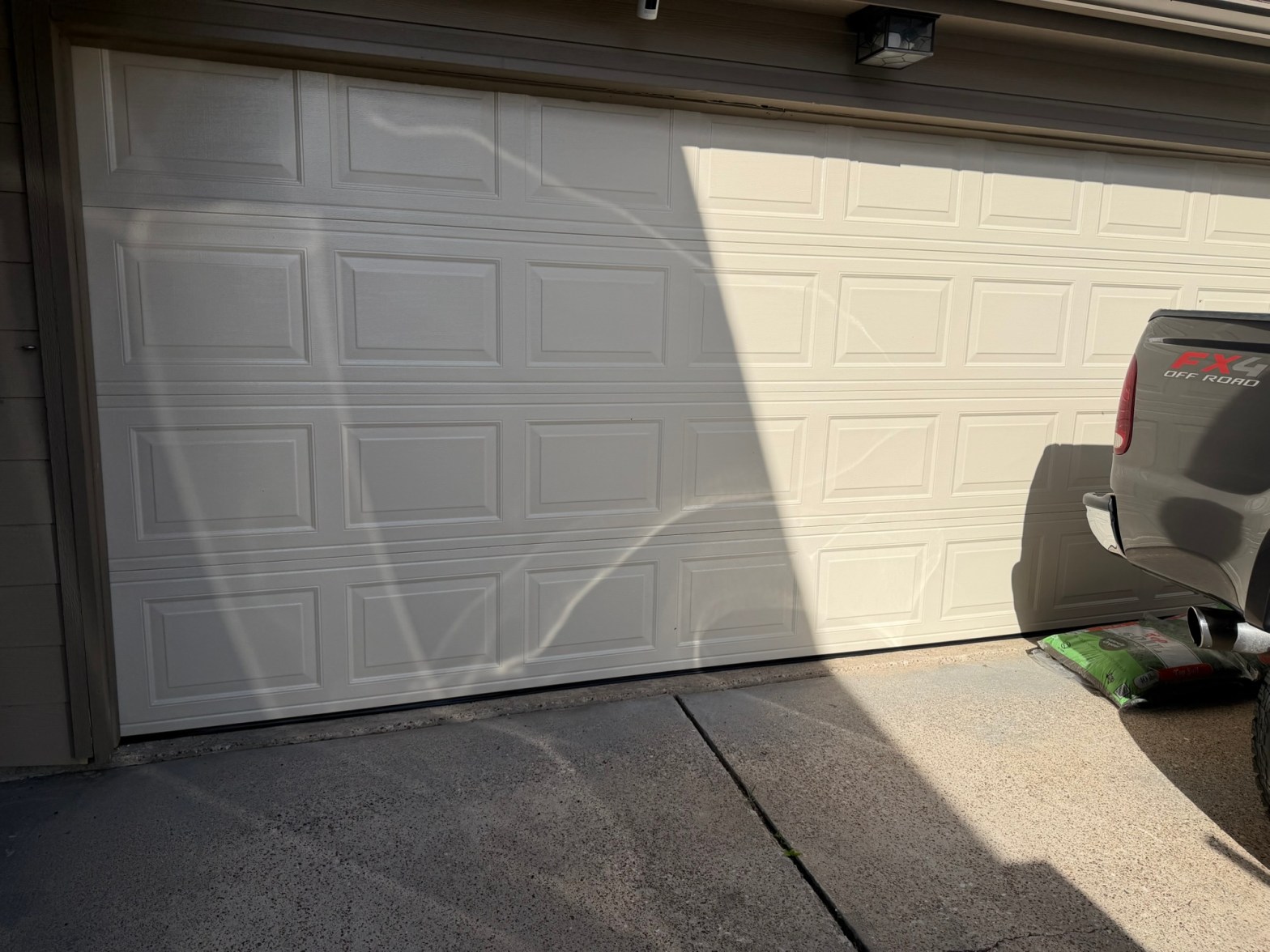
This is one of the most common doors we install — a clean, straightforward almond 25-gauge steel garage door.
It’s a great option for homeowners who want to replace an old or damaged door without overcomplicating the project.
A new steel garage door can give you:
✅ A cleaner, updated appearance ✅ Smoother and more reliable operation ✅ Better overall fit and function ✅ A durable, low-maintenance replacement ✅ A fresh look without going overboard on cost
Not every garage door replacement has to be custom, decorative, or expensive.
Sometimes a simple steel door in the right color is all it takes to completely clean up the look of the home and get everything working the way it should again.
If your current garage door is damaged, worn out, or simply ready to be replaced, give The Garage Door Guys a call.